Tesla Admits FSD Flaws Require Proprietary Mapping Infrastructure
The electric vehicle maker is developing an internal navigation system to correct persistent errors in speed limit recognition and routing, marking a strategic departure from its earlier vision-only philosophy.
By Imani Brooks ·
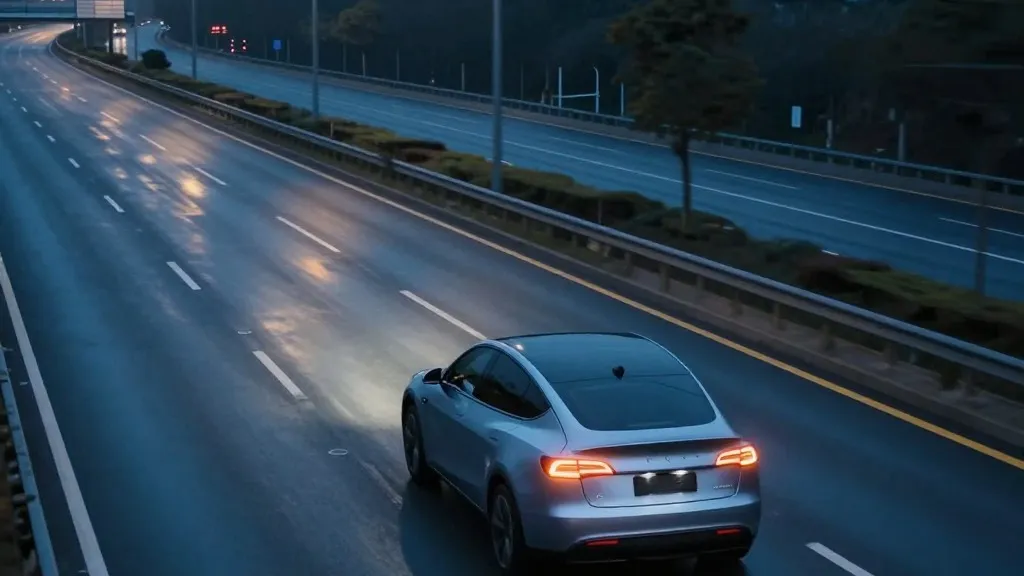
The debate over the optimal architecture for autonomous driving has reached a decisive turning point as Tesla acknowledges that its Full Self-Driving (FSD) system requires a dedicated, internally developed map layer. This admission signals a significant realignment in the company's technical strategy, moving away from the purely camera-based approach that defined its public stance for the better part of a decade.
During the Q3 2026 earnings call, Ashok Elluswamy, Tesla’s Vice President of AI, confirmed that the company is constructing a new AI-based mapping and navigation architecture. This system is designed to ingest data from the company’s extensive vehicle fleet, allowing it to learn individual driver preferences and respond to voice commands. Elluswamy explicitly stated that the company should no longer depend on external providers for mapping data, a direct response to shareholder inquiries regarding persistent issues with speed limit accuracy, parking logic, and route selection.
The rollout of this new infrastructure is planned in phases. The technology will initially manage the start and end points of trips alongside the upcoming FSD v15 update. Over the subsequent months, the system is expected to assume full control over navigation, parking, and destination handling. This incremental approach suggests a focus on stabilizing the user experience in high-friction areas of the driving cycle before expanding the map's utility to the entire journey.
This development represents a marked reversal from the narrative established by CEO Elon Musk in 2019, when he dismissed high-precision maps as a "really bad idea" that rendered self-driving systems brittle. At that time, Tesla argued that relying on detailed lane maps was a crutch similar to using lidar, which Musk famously termed a "fool’s errand." The current strategy, however, mirrors the operational model of competitors like Waymo, which relies on sensor-equipped fleets to build and maintain high-definition maps before launching driverless services.
The necessity for this shift is underscored by recent performance data and regulatory scrutiny. A Belgian road safety group reported that FSD exceeded speed limits in 55% of 30 km/h zones in Brussels, with the vehicle often displaying an incorrect 50 km/h limit on its dashboard. In the United States, the National Highway Traffic Safety Administration is considering an investigation into claims that Tesla Robotaxis speed through active school zones, a review covering approximately 1,000 Model Y and Cybercab vehicles. These incidents highlight that the system struggles with basic environmental cues, such as static speed limit signs, which a robust map layer could mitigate.
From a market perspective, this move positions Tesla’s fleet as a data collection engine that feeds a centralized, proprietary map. While Tesla has always used standard navigation maps, the new architecture aims to create a more granular, fleet-learned representation of the road network. This is particularly relevant for the company’s Robotaxi operations, which currently function within geofenced service areas. A continuously updated map built from millions of vehicles could provide a competitive advantage in scaling these services, reducing the reliance on manual updates or third-party licensing fees.
For investors and market analysts, the announcement reduces the uncertainty surrounding the timeline for unsupervised FSD in consumer vehicles, which is currently targeted for Q2 2027. By addressing the foundational data issues that have plagued the vision-only system, Tesla is laying the groundwork for a more reliable autonomous experience. The shift also suggests that the industry consensus is converging on the idea that a hybrid approach—combining real-time vision with a persistent, detailed map—is the most viable path to commercial autonomy.
Source: Electrek