NHTSA Proposes Mandatory Cyan Lighting for Autonomous Vehicle Compliance
Federal regulators seek to standardize blue-green marker lights to identify driverless cars, while simultaneously removing outdated requirements for physical controls like steering wheels and pedals.
By Noor Haddad ·
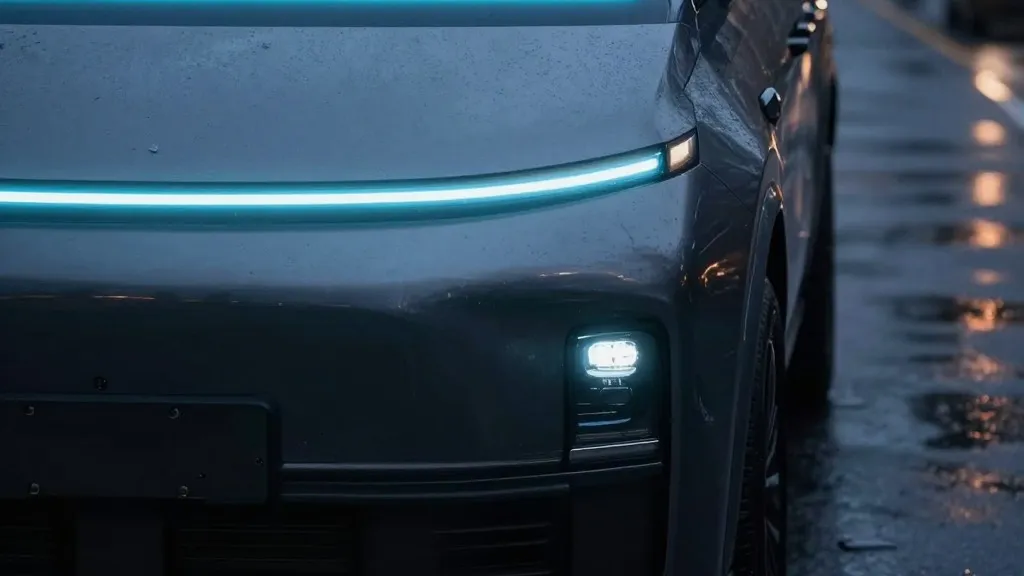
The National Highway Traffic Safety Administration (NHTSA) has formally proposed that driverless vehicles be equipped with distinctive cyan-colored marker lamps to indicate that an automated driving system is in control. This regulatory move resolves a years-long industry debate over how robotaxis should visually distinguish themselves from human-driven cars, replacing a fragmented landscape of flashing text, audio alerts, and custom lighting with a single, standardized federal requirement. The proposal, part of a broader rewrite of Federal Motor Vehicle Safety Standard (FMVSS) No. 108, aims to clarify the visual language of autonomous vehicles for law enforcement and other road users.
The specific choice of cyan is driven by the need to fill a visual gap in the current automotive lighting spectrum. Existing standards already allocate red, amber, white, and flashing blue or red lights for critical functions such as braking, turn signals, headlights, and emergency vehicle identification. By introducing a blue-green hue, the agency intends to create a signal that is easily recognizable without causing confusion or misinterpretation among drivers who are accustomed to the traditional color codes. This standardization is designed to ensure that whether a vehicle is operated by Waymo, Nuro, Zoox, or major automakers like GM and Mercedes, the visual cue for autonomy remains consistent nationwide.
Although the cyan marker lights would remain optional for manufacturers under the proposed rule, the agency is establishing strict federal standards regarding their color, brightness, and placement. This approach allows for flexibility in vehicle design while preventing a patchwork of inconsistent signals. The goal is to ensure that any automaker choosing to implement these lights does so within a uniform legal framework, eliminating the potential for a confusing mix of proprietary signals that could vary by brand or region. This follows earlier state-level experiments, such as the turquoise lights approved for Mercedes-Benz’s Level 3 Drive Pilot system, though the automaker has since pivoted to a different technological approach.
Beyond the introduction of new lighting, the proposal seeks to modernize the regulatory landscape by removing requirements that are logically incompatible with vehicles lacking a human driver. Current federal rules mandate the presence of physical hazard switches, manual beam shifters, and turn levers inside the cabin. NHTSA proposes to eliminate these mandates, acknowledging that they serve little purpose in a vehicle controlled entirely by software. Additionally, the agency is updating the 12.8-volt testing standard to accommodate modern LED architectures, thereby reducing administrative hurdles for manufacturers building new vehicle platforms.
The agency is also reconsidering rigid requirements regarding the positioning of high-beam and low-beam lights relative to one another. By relaxing these structural constraints, NHTSA aims to grant engineers greater freedom in designing lighting systems optimized for autonomous operation. This update is part of a broader administrative push by the Department of Transportation to streamline the deployment of autonomous vehicles. The overarching objective is to facilitate the creation of cars that do not require traditional human-oriented controls, such as steering wheels and pedals, which are otherwise required under existing FMVSS regulations.
However, the path to a fully streamlined regulatory environment remains complex, as existing rules continue to be enforced against current models. Last month, NHTSA initiated an audit query into the Tesla Cybercab, examining the technical data and processes Tesla relied upon when certifying the vehicle. The focus of this inquiry is the absence of specific design features, including sideview mirrors, pedals, and a steering wheel, all of which are currently required under the standard. This audit highlights the tension between the agency’s forward-looking proposals for autonomous vehicles and its ongoing enforcement of rules designed for traditional, human-operated automobiles.
The proposed changes reflect a pragmatic shift in how federal regulators view the future of transportation. By standardizing the visual identity of robotaxis and removing obsolete physical control requirements, NHTSA is attempting to bridge the gap between legacy automotive safety standards and the realities of autonomous technology. For readers in Texas and the South Central states, where autonomous testing and deployment are increasingly visible, these regulatory clarifications may soon influence the types of vehicles encountered on local roads and the legal expectations surrounding their operation.
Source: The Verge